Magnetic Particle Testing (MPT) Training in Kolkata
Palium Skills offers
Magnetic Particle Testing (MPT) Training in Kolkata for students, engineers, diploma holders, NDT technicians, welding inspectors, QA/QC professionals and working professionals who want to develop practical knowledge of Magnetic Particle Testing as a Non-Destructive Testing (NDT) method.
Magnetic Particle Testing, also known as
Magnetic Particle Inspection (MPI) or
MT, is an NDT method used to detect suitable surface and near-surface discontinuities in
ferromagnetic materials. The training introduces participants to the principles of magnetization, magnetic flux leakage, magnetic particles, inspection techniques, indication interpretation, equipment, defect identification and inspection documentation.
The course is particularly relevant to professionals involved in
welding inspection, fabrication, manufacturing, engineering, maintenance, quality control and industrial inspection.
What is Magnetic Particle Testing?
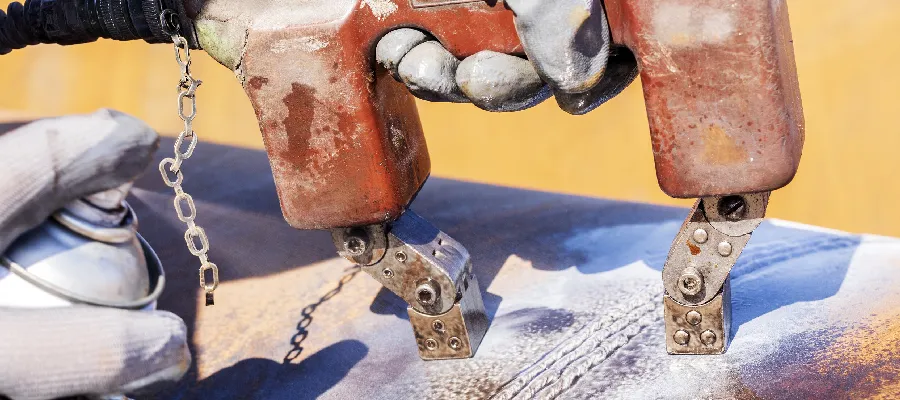
Magnetic Particle Testing is a Non-Destructive Testing method used to identify certain surface and near-surface discontinuities in ferromagnetic materials.
During an MPT inspection, the component is magnetized. If a discontinuity interrupts the magnetic field, it can create
magnetic flux leakage at the defect location. Magnetic particles applied to the surface can gather around the leakage field and produce an indication that can be examined and evaluated by the inspector.
MPT is commonly used for suitable ferromagnetic components where detecting cracks and other relevant discontinuities is important.
Magnetic Particle Testing Training in Kolkata
Palium Skills provides
MPT NDT Training in Kolkata designed to help participants understand the theory and practical principles behind magnetic particle inspection.
The training covers the fundamentals of the method as well as important inspection considerations such as:
- Principles of Magnetic Particle Testing
- Magnetism and magnetic fields
- Magnetic flux and flux leakage
- Ferromagnetic materials
- Surface and near-surface discontinuities
- Magnetic particle materials
- Dry and wet magnetic particle methods
- Visible and fluorescent magnetic particle inspection
- Magnetization techniques
- Yoke and prods techniques
- Inspection procedures
- Indication interpretation
- Defect evaluation
- Demagnetization
- Equipment and accessories
- Inspection documentation
- Applicable codes, standards and procedures
The exact practical activities, course duration and batch structure may vary depending on the training programme.
Objectives of Magnetic Particle Testing Training
The objective of the MPT course is to develop an understanding of how magnetic particle inspection is planned, performed and evaluated.
After completing the training, participants should have a better understanding of:
- The basic principles of Magnetic Particle Testing
- How magnetization is applied to a component
- How magnetic flux leakage is generated by discontinuities
- Selection of appropriate MPT techniques
- Dry and wet magnetic particle inspection
- Visible and fluorescent particle inspection
- Selection of suitable equipment and accessories
- Identification of relevant and non-relevant indications
- Interpretation of magnetic particle indications
- Evaluation of discontinuities
- Importance of field direction and adequate magnetization
- Demagnetization requirements
- Inspection reporting and documentation
- Quality-control requirements for MPT
Dry and Wet Magnetic Particle Testing
Magnetic Particle Testing may be performed using dry or wet particle methods.
Dry Particle Testing
Dry magnetic particles are applied to the magnetized component. The technique can be useful for certain field applications and is influenced by factors such as particle mobility, surface condition and inspection conditions.
Wet Particle Testing
Magnetic particles are suspended in a suitable liquid carrier and applied to the component. Wet techniques can provide high sensitivity for appropriate applications and may be used with visible or fluorescent particles.
The choice of method depends on the inspection requirement, equipment, component, surface condition and applicable procedure.
Fluorescent Magnetic Particle Testing
Fluorescent MPT uses fluorescent magnetic particles that can be observed under suitable ultraviolet illumination.
The training introduces participants to:
- Fluorescent magnetic particles
- UV/black-light inspection
- Inspection environment
- Indication visibility
- Surface preparation
- Relevant indication interpretation
Fluorescent inspection should be performed according to the applicable procedure and required inspection conditions.
Magnetic Particle Testing for Welding Inspection
Magnetic Particle Testing is widely associated with
welding inspection because it can be used to detect suitable surface and near-surface discontinuities in ferromagnetic welds and components.
MPT may be considered for applications involving:
- Welded joints
- Weld toes
- Weld surfaces
- Heat-affected areas
- Ferromagnetic fabrication components
- Machinery components
- Structural components
- Forgings and castings where applicable
Possible welding-related indications may include cracks and other discontinuities that are suitable for detection by magnetic particle inspection.
For professionals interested in broader welding inspection skills, MPT can complement knowledge of
Visual Testing (VT), Liquid Penetrant Testing (PT), Ultrasonic Testing (UT) and Radiographic Testing (RT).
MPT in QA & QC
Magnetic Particle Testing can form part of a broader
Quality Assurance and Quality Control (QA/QC) inspection programme.
QA/QC professionals may need to understand:
- When MPT may be appropriate
- What type of discontinuities MPT can detect
- Material limitations
- Inspection requirements
- NDT reports
- Inspection documentation
- Acceptance criteria
- Traceability
- Coordination with qualified NDT personnel
- Client and third-party inspection requirements
MPT training can therefore be useful for QA/QC professionals who work with fabrication, manufacturing, engineering and inspection activities.
Magnetic Particle Testing vs Other NDT Methods
Different NDT methods are designed for different inspection requirements.
| NDT Method |
General Application |
| Visual Testing (VT) |
Surface condition, workmanship and visible discontinuities |
| Liquid Penetrant Testing (PT) |
Surface-breaking discontinuities on suitable non-porous materials |
| Magnetic Particle Testing (MT/MPT) |
Surface and near-surface discontinuities in suitable ferromagnetic materials |
| Ultrasonic Testing (UT) |
Examination for detectable internal discontinuities and thickness measurement in suitable applications |
| Radiographic Testing (RT) |
Radiographic examination of internal features |
| Radiographic Film Interpretation (RTFI) |
Interpretation and evaluation of radiographic images |
No single NDT method is suitable for every inspection. Method selection depends on material, component geometry, accessibility, expected discontinuity, inspection objective and applicable requirements.
Advantages of Magnetic Particle Testing
Some advantages of MPT include:
- Effective for detecting suitable surface discontinuities
- Can detect certain near-surface discontinuities
- Suitable for many ferromagnetic components
- Useful for welding inspection
- Can be performed using portable equipment
- Inspection can be relatively quick
- Suitable for a variety of component geometries
Limitations of Magnetic Particle Testing
MPT also has important limitations:
- It is generally applicable only to suitable ferromagnetic materials
- It is not suitable for non-ferromagnetic materials
- Surface condition can influence inspection
- Defect orientation affects detectability
- Appropriate magnetization direction is important
- Some applications require demagnetization
- Interpretation requires proper training and experience
- Inspection must follow applicable procedures and acceptance criteria
Understanding these limitations is essential when selecting MPT as part of an NDT inspection programme.
Practical Magnetic Particle Testing Training
Where practical facilities are available for the applicable batch, participants may be introduced to practical aspects of MPT such as:
- Component preparation
- Surface cleaning
- Equipment setup
- Magnetization
- Magnetic particle application
- Yoke inspection
- Indication observation
- Defect interpretation
- Field-direction considerations
- Demagnetization
- Inspection reporting
Practical training availability, equipment, duration and activities should be confirmed for the specific batch before enrolment.
Who Should Attend Magnetic Particle Testing Training?
MPT training can be useful for:
- NDT technicians
- Welding inspectors
- QA/QC inspectors
- QA/QC engineers
- Mechanical engineers
- Diploma engineers
- Engineering students
- Fabrication professionals
- Manufacturing professionals
- Maintenance professionals
- Inspection personnel
- Quality-control professionals
- Working professionals seeking NDT knowledge
Participants should check the qualification and certification requirements applicable to their intended job role or industry.
Career Opportunities After MPT Training
Knowledge of Magnetic Particle Testing can be relevant to inspection and quality-related roles in industries such as:
- Oil and gas
- Power
- Manufacturing
- Engineering
- Fabrication
- Construction
- Pipelines
- Automotive
- Heavy engineering
- Shipbuilding
- Structural fabrication
- Maintenance
- Industrial inspection
MPT is often used as part of a broader NDT and inspection skill set. Career opportunities depend on qualifications, practical competence, experience, certification requirements and employer expectations.
MPT Training and NDT Certification
Training and certification should be considered separately.
A course certificate issued by a training institute does not automatically represent personnel certification under every applicable NDT certification scheme.
Professionals seeking NDT certification should check the requirements applicable to their employer, industry, certification system and intended role.
Where applicable, candidates may pursue specialist NDT qualification or certification according to the relevant requirements.
Magnetic Particle Testing Standards
MPT inspection procedures may be governed by applicable industry codes, standards, specifications and written procedures.
Examples of standards commonly associated with magnetic particle testing include:
- ASTM E1444/E1444M
- ISO 9934
- ASME Section V, where applicable
The applicable standard depends on the component, industry, contract, client specification and inspection requirement.
Participants should always follow the current applicable edition and the inspection procedure specified for the particular job.
Magnetic Particle Testing Training in Kolkata at Palium Skills
Palium Skills provides technical and professional training in Kolkata for students and working professionals.
The
Magnetic Particle Testing Training in Kolkata programme is intended to provide structured knowledge of MPT principles, magnetization, magnetic particles, inspection techniques, indications, defect detection and reporting.
Training availability and delivery mode may vary according to the batch.
South Kolkata Training Centre
1st Floor, Sheeba Bhavan, 1/22 Poddar Nagar
Near South City Mall
Kolkata – 700068
Salt Lake / Sector V Training Centre
5th Floor, RDB Boulevard
Block GP, Salt Lake Electronics Complex – Sector V
Kolkata – 700091
MPT Course Details
| Course Information |
Details |
| Course Name |
Magnetic Particle Testing (MPT) Training |
| Category |
Non-Destructive Testing (NDT) |
| Method |
Magnetic Particle Testing / Magnetic Particle Inspection |
| Training Location |
Kolkata |
| Training Mode |
Classroom / Live Online, subject to batch |
| Practical Training |
As applicable to the batch |
| Certificate |
Palium Skills Course Certificate |
| Eligibility |
Technical, Engineering or Science background may be suitable |
| Batch Schedule |
Contact Palium Skills for current schedule |
| Course Fee |
Contact Palium Skills for current fee |
Course duration, fee, practical facilities, training mode and certification arrangements should be confirmed with Palium Skills before enrolment.
Read More About Magnetic Particle Testing
Palium Skills also provides educational resources covering Magnetic Particle Testing concepts, inspection procedures, equipment, interview questions, standards and common MPT topics.
Readers interested in expanding their knowledge can explore the
Commonly Asked Questions on Magnetic Particle Testing (MT) resource on the Palium Skills website.
Enrol for Magnetic Particle Testing Training in Kolkata
Looking for
Magnetic Particle Testing Training in Kolkata?
Palium Skills provides technical training covering the principles, techniques and applications of Magnetic Particle Testing, with relevance to NDT inspection, welding inspection and QA/QC activities.
Contact Palium Skills for the latest information about:
- Upcoming MPT batches
- Course duration
- Training mode
- Practical training availability
- Course fee
- Certification arrangements
- Eligibility
- Enrolment
Phone: +91-8420594969
WhatsApp: +91-9903130500
Email: info@paliumskills.com
Palium Skills – Technical & Professional Training in Kolkata